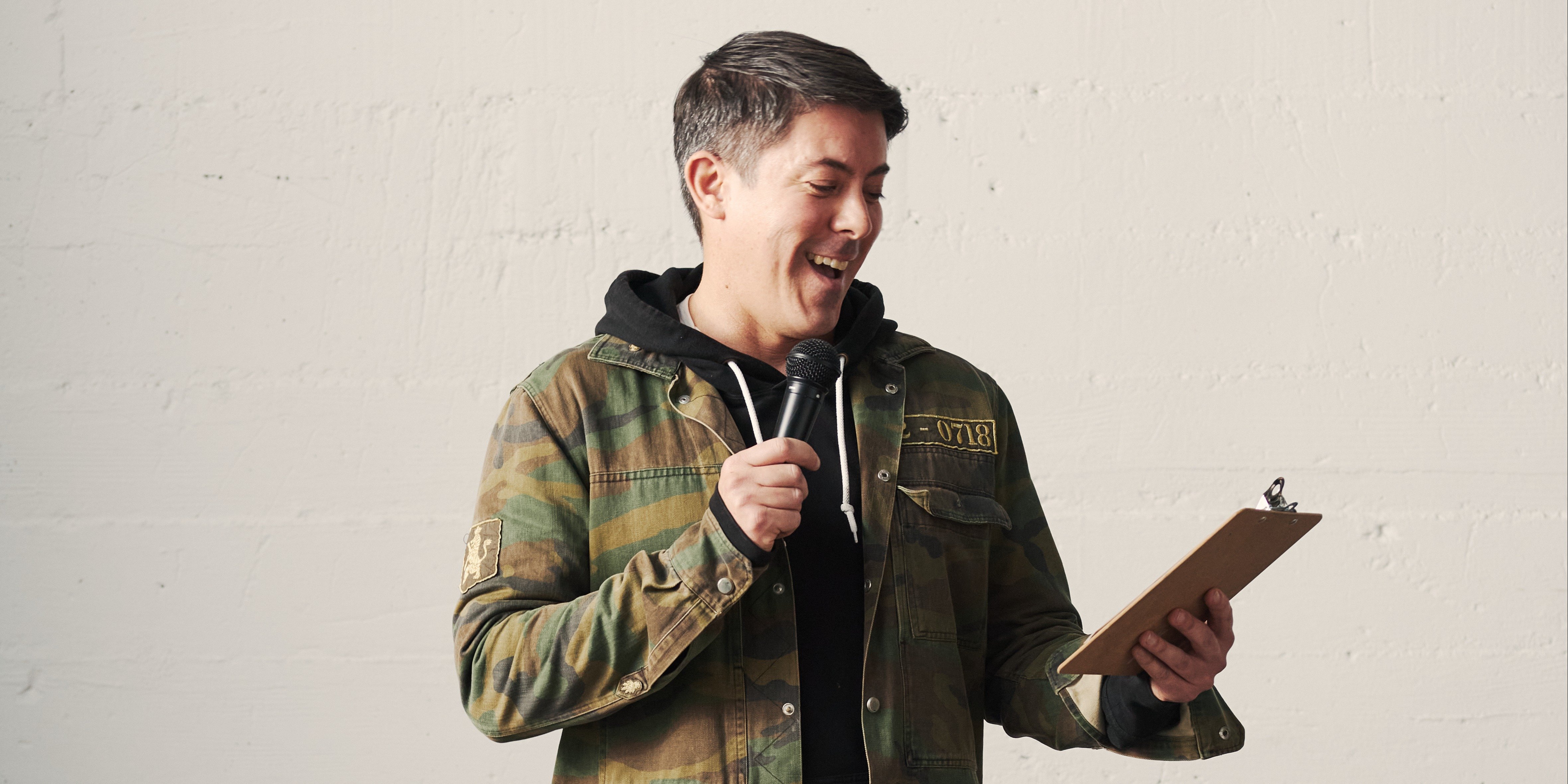
This is part of our Marco Labs series, where we spotlight the people and experiences that bring teams together in unexpected ways.
From Bartender to Team-Building Secret Weapon
"People love to feel smart, and they love to win," says Matt Sterling, grinning. "But the real magic? I've attended weddings of people who met at my trivia nights. I've watched strangers become best friends over a badly guessed answer about 1990s sitcoms."
Sterling's path to becoming one of New York's most in-demand corporate trivia hosts started behind the bar. As a bartender, he'd silently play along with the trivia nights happening in his venue. One night, the regular host didn't show up. Sterling grabbed the mic — and never gave it back.
"I didn't want it to be too structured or too serious," he says. "My whole approach was: let people know upfront that this is about having fun. The competition is real, but the point is connection."
The Jeopardy Effect
Sterling grew up watching Jeopardy with his father nearly every night. "Alex Trebek is my trivia idol," he says without hesitation. That childhood obsession with random knowledge — state capitals, Oscar winners, the periodic table — became the foundation for a career he never planned.
"I always had this broad mastery of useless facts," he laughs. "Turns out, useless facts are incredibly useful when you're trying to get a group of strangers to talk to each other."
And he's right. There's something about trivia that bypasses the usual social barriers. The VP of Sales and the new intern are on equal footing when the question is about 80s hair bands. The CEO's knowledge of geography doesn't matter when the category switches to reality TV. Trivia is the great equalizer.
Why Trivia Works for Corporate Teams in 2026
Sterling has hosted hundreds of corporate events, and he's noticed patterns that most team-building facilitators miss. According to a 2025 Gallup report, only 23% of employees worldwide are actively engaged at work — and activities like trivia that create genuine connection are one of the most effective ways to move that needle.
1. It Reveals Hidden Personalities
"You learn so much about people from how they play trivia. The quiet engineer who suddenly comes alive during the science round. The account manager who knows every World Cup result since 1970. The designer who's weirdly competitive about pop culture." These moments of discovery are what Sterling calls "connection shortcuts" — they give colleagues a reason to talk that has nothing to do with deadlines or deliverables.
2. It Creates Shared Stories
"Six months after an event, nobody remembers the team offsite keynote. But they remember the time their table was convinced that the capital of Australia was Sydney and lost by one point." Shared stories — especially slightly embarrassing ones — are the raw material of team culture.
3. It's Genuinely Inclusive
Unlike many team-building activities (ropes courses, escape rooms, athletic challenges), trivia doesn't require physical ability, extroversion, or cultural context. "I design rounds so that everyone has a moment to shine," Sterling explains. "Sports, science, pop culture, history, food, music — everyone knows something. The trick is making sure the categories rotate so nobody feels left out."
The Art of Hosting
Sterling's secret isn't just good questions — it's how he reads the room. "The first round, I'm watching. Who's engaged? Who's hanging back? Which tables are clicking? Then I adjust." He'll throw in easier questions to keep energy high, harder ones to build tension, and wildcard rounds to keep things unpredictable.
"The worst trivia hosts make it about themselves. The best ones make it about the room."
He also has a strict rule: no phones. "That's non-negotiable. The whole point is that people are looking at each other, not at Google. You'd be amazed how different a room feels when sixty people put their phones away for an hour."
How to Bring Trivia to Your Next Offsite
Sterling's trivia nights have become a staple at Marco-planned offsites. They work perfectly as a Day 1 evening icebreaker — after a day of sessions and strategy, a trivia night gives teams a way to unwind and connect without the pressure of forced networking.
"The best feedback I get isn't 'great questions,'" Sterling says. "It's when someone comes up afterward and says, 'I've worked with that person for two years and I didn't know they were that funny.'"
That's the whole point. Not the trivia. The discovery.
Planning a 2026 offsite and want to include trivia? Take our retreat quiz to get started, or reach out to our team for a custom offsite proposal. Marco has planned 500+ offsites and can help you build the perfect mix of activities for your team.
Frequently Asked Questions
How long does a corporate trivia night typically last?
Most corporate trivia events run 60-90 minutes, which is the sweet spot for keeping energy high without losing attention. For larger groups (50+ people), Sterling recommends 90 minutes to allow time for team formation, multiple rounds, and a final championship round.
What size groups work best for trivia team building?
Trivia works well for groups of 20 to 200+. Teams of 4-6 people per table are ideal — small enough that everyone participates, large enough that you get a range of knowledge. For very large groups, Sterling runs multiple rounds with table playoffs leading to a grand finale.
Can trivia be customized for our company or industry?
Absolutely. Sterling regularly creates custom rounds featuring company history, industry knowledge, or inside jokes that only the team would get. "The custom round is always the loudest," he says. "People lose their minds when the question is about something only they would know."
Is trivia effective for remote or hybrid teams meeting in person?
Trivia is one of the most effective icebreakers for teams that don't see each other regularly. The competitive format gives people a shared experience to reference, and the team structure forces interaction between people who might not otherwise connect during an offsite. It's why trivia is one of Marco's most requested Day 1 activities for distributed teams gathering in person.